If you've ever walked out of the gym feeling frustrated because you couldn't lift more weight, force out another rep, or beat your previous workout in some way, you're not alone. Many lifters feel pressured to make progress every time they train. It's easy to fall into the mindset that if you're not lifting heavier or doing more every week, you're not getting stronger. Over time, this pressure can make training feel like a constant competition against yourself.
But here's something worth remembering: strength training isn't a race, and progress doesn't happen linearly (unless you’re a beginner).
Some days you'll feel strong and ready to push your limits. Other days, you might struggle with weights that normally feel manageable. That’s because factors like sleep, stress, recovery, nutrition, and everyday life can all affect your performance.
That doesn't mean you've lost strength or that your workout was a waste of time.
Progressive overload is an important part of building strength, but it doesn't mean you have to add weight every single week. Improving your technique, controlling your movements, completing the same weight with better form, or simply staying consistent are all valuable parts of progress. Sometimes maintaining your current strength is exactly what your body needs.
The goal isn't to set a personal record every time you walk into the gym. It's to build strength over time while allowing your body to recover and adapt. Instead of judging every workout by how much weight you lifted, look at the bigger picture. Strength is built through patience, consistency, and smart training.
Remember, one workout doesn't define your progress. What you do consistently over months and years is what makes you stronger.
Why Submaximal Training Works
Submaximal training allows a lifter to focus on important components of strength training, such as proper technique and fatigue management.
When you're not constantly pushing heavy weights or training to failure, you have more opportunity to concentrate on how you're performing each repetition. You can focus on maintaining proper positioning, controlling the weight, improving your range of motion, and developing consistent movement patterns. These details are important because good technique helps build a strong foundation and prepares you to handle heavier loads safely and effectively over time.
Another major benefit is better fatigue management. Constantly training at maximum effort can lead to excessive fatigue, making it harder to recover and perform well during future workouts. By leaving a few repetitions in reserve, you can still challenge your muscles without completely exhausting yourself. This allows you to maintain training consistency, recover between sessions, and accumulate quality work over time. Ultimately, strength isn't just about how much weight you can lift in one workout; it's about how effectively you can train over weeks, months, and years.
So how do you choose the right weight?
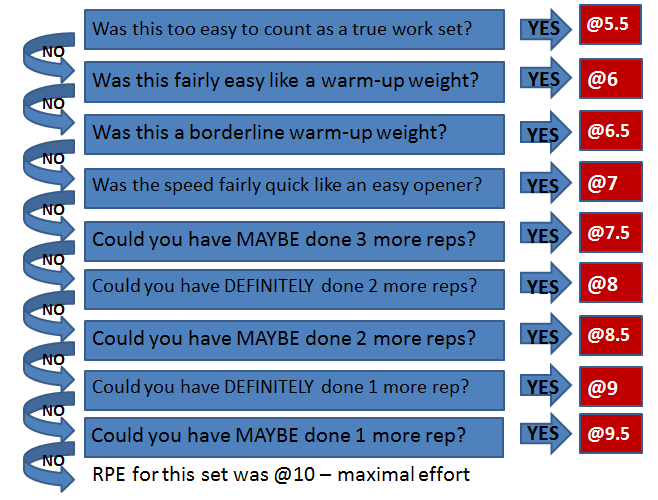
A great way to take the pressure off constantly increasing weight is to use Rate of Perceived Exertion (RPE) in your strength training. RPE is a way to measure how difficult an exercise feels based on your effort, rather than focusing only on the amount of weight you're lifting. It allows you to adjust your training based on how your body feels that day and takes into account how many additional repetitions you believe you could complete before reaching muscular failure.
In strength training, RPE is commonly measured on a scale of 1–10, with 10 representing maximum effort. For example, if you finish a set of 8 squats and feel like you could have completed two more repetitions, that set would be an RPE 8. If you could only complete one more repetition, it would be an RPE 9.
Why RPE Matters in Strength Training
One of the biggest advantages of RPE is that it allows you to adjust your workouts based on how you are performing that day.
For example, you might normally squat 135 pounds for 5 repetitions at an RPE of 7. However, after a poor night's sleep or a stressful day, that same weight might feel like an RPE 9. Instead of forcing yourself to increase the weight, you can adjust the load to maintain the intended effort level.
This is especially important because strength training is not about pushing yourself to the limit every time you enter the gym. Training too hard too frequently can make recovery difficult and negatively affect your performance.
How to Use RPE for Better Progress
For general strength training, an RPE of 7–8 is a useful target for many working sets. This allows you to challenge your muscles without constantly pushing to failure.
Here are a few ways to incorporate RPE into your workouts:
Prioritize technique: Don't sacrifice proper form just to lift heavier.
Adjust the weight: Increase or decrease the load depending on how challenging the exercise feels.
Leave repetitions “in the tank": You don't need to reach muscular failure to make progress.
Monitor your effort: Pay attention to how each set feels rather than focusing only on the numbers.
Track your workouts: Record your weights, repetitions, and RPE to identify progress over time.
The biggest takeaway: RPE teaches you that a successful workout isn't always about lifting more weight. Sometimes, performing the same weight with better technique and less effort is a sign of progress. Learning to manage your effort is an important part of becoming stronger for life.
The Bottom Line
Strength training should be about long-term progress, not winning every workout. RPE helps you listen to your body, make smarter training decisions, and understand that maintaining the same weight can still be productive. Instead of asking yourself, "How much more weight can I add next week?" try asking, "How well can I perform this exercise today?"
Remember, the goal is not to lift more every workout. The goal is to become stronger over time.
